
製品説明
Source factory ac vibrator motor used for vibrating screen machines
Introduction
It is special asynchronous vibrating source uniting motive power source and vibrating source into once, it and can be used to equip vibrating screen, vibrating feeder, vibrating conveyor, vibrating ore drawing machine, vibrating shakeout machine, vibrating platform (plain bumper), bulkhead vibration.
詳細
Features
1. 24 hours continuous working-We choose High purity silicon steel plate, its thickness is thin to 0.5mm. High stacking assembling coefficient, flat and uniform, results in generating less heat and lower iron loss during running, which make it more suitable for 24 hours continuous working.
(All processing conform to CHINA GB2521-88 standard.
2. Apply to severe environment-100% pure copper coil provides better thermal conductivity, longer life than aluminum wire, and the surface of coil is painted with anti-mildew coverage, which make it also work well in hot environment and hot & humid environment (Support ambient temperature to 50°).
3. Safety-With special flanging protective cover + stainless steel outgoing line, our lowest protection grade is IP 55, support to customize IP65 for dust, moist, etc., bad working environment.
4. Longer Life-Our bearing chooses Chinese Top bearing brand (ZWZ, HRB, TWB), working life is not less than 8000 hours. Support optional SKF, CHINAMFG bearing.
5. Appearance-Our casting uses resin CHINAMFG technical, which make sure the casting’s surface is more flat and smooth, with advanced painting technical, that is why our motor appearance looks brighter and more beautiful.
It is special asynchronous vibrating source uniting motive power source and vibrating source into once, it can be used to equip vibrating screen, vibrating feeder, vibrating conveyor, vibrating platform, etc.
Parameters
| モデル |
回転数 | Max exciting Force (KN) |
Rated Power (KW) |
定格電流 (あ) |
Fastening bolt |
Weight KG | |
| XVM0.7-2 |
2900 |
0.7 | 0.15 | 0.4 |
M12 |
11 | |
| XVM1.5-2 | 1.5 | 0.15 | 0.4 | 12 | |||
| XVM2.5-2 | 2.5 | 0.25 | 0.4 | 13 | |||
| XVM0.7-2 | 0.7 | 0.15 | 0.4 | 11 | |||
| XVM1.5-2 | 1.5 | 0.15 | 0.4 | 12 | |||
| XVM 5-2 | 5.0 | 0.40 | 1.0 | M16 | 23 | ||
| XVM 8-2 | 8.0 | 0.75 | 1.6 | M20 | 41 | ||
| XVM1.2-4 |
1460 |
1.2 | 0.07 | 0.25 | M12 | 14 | |
| XVM1.2-4 | 1.2 | 0.07 | 0.25 | 14 | |||
| XVM2.5-4 | 3 | 0.10 | 0.3 | 18 | |||
| XVM 5-4 | 5 | 0.20 | 0.5 | M16 | 27 | ||
| XVM 8-4 | 8 | 0.40 | 1.1 | M20 | 45 | ||
| XVM10-4 | 10 | 0.50 | 1.1 | 48 | |||
| XVM16-4 | 16 | 0.75 | 1.8 | 65 | |||
| XVM2.5-6 |
980 |
2.5 | 0.20 | 0.6 | M16 | 27 | |
| XVM5-6B | 5 | 0.40 | 1.2 | 38 | |||
| XVM 5-6 | 5 | 0.40 | 1.2 |
M20 |
45 | ||
| XVM 8-6 | 8 | 0.55 | 1.5 | 53 | |||
| XVM 10-6 | 10 | 0.75 | 2.1 | 69 | |||
| XVM 16-6 | 16 | 1.10 | 2.9 | 85 | |||
| XVM 20-6 | 20 | 1.50 | 3.5 | 107 | |||
| XVM 26-6 | 26 | 2.20 | 5.6 | M20 | 168 | ||
| XVM 30-6 | 30 | 2.20 | 5.6 | 170 | |||
| XVM 5-8 |
740 |
5 | 0.4 | 1.6 | M20 | 69 | |
| XVM 10-8 | 10 | 0.75 | 2.9 | 107 | |||
| XVM 16-8 | 16 | 1.5 | 4.1 | M20 | 165 | ||
| XVM 20-8 | 20 | 2.20 | 6.0 | 189 | |||
| XVM 30-8 | 30 | 3.00 | 8.1 | M24 | 226 | ||
| XVM 50-8 | 50 | 4.20 | 10.5 | M30 | 285 | ||
| XVM 75-8 | 75 | 6.50 | 16.0 | M36 | 382 | ||
| XVM100-8 | 100 | 8.50 | 21.8 | 650 | |||
| XVM120-8 | 120 | 10.0 | 22.0 | 680 |
Note: The motor can be customized.
Any help, welcome to send inquiry to us /* 2571 年 1 月 22 日 19:08:37 */!function(){function s(e,r){var a,o={};try{e&&e.split(“,”).forEach(function(e,t){e&&(a=e.match(/(.*?):(.*)$/))&&1
| 応用: | 産業 |
|---|---|
| スピード: | 一定速度 |
| ステーター数: | 三相 |
| 関数: | 運転 |
| ケース保護: | 密閉型 |
| 極数: | 6 |
| カスタマイズ: |
利用可能
|
|
|---|
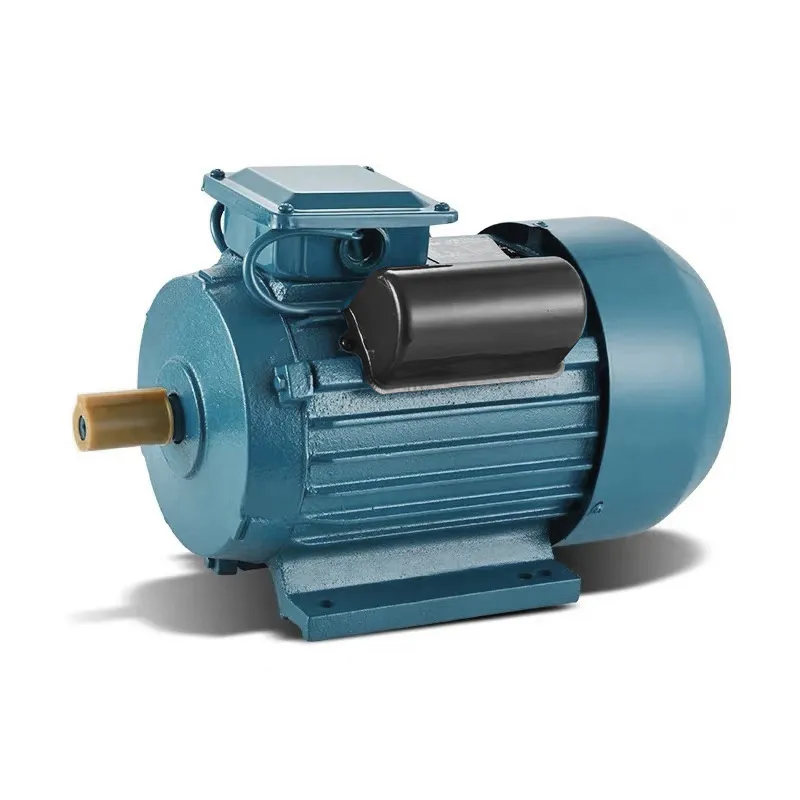
特定の用途に AC モーターを選択する際に考慮すべき要素は何ですか?
特定の用途に適したACモーターを選択する際には、モーターが要件を満たし、最適な性能を発揮するために、いくつかの要素を考慮する必要があります。考慮すべき主な要素は次のとおりです。
- 電源要件: 必要なトルクと速度を含む、アプリケーションの電力要件を決定します。モーターは、特定のタスクの要求を満たすのに十分な出力を持つ必要があります。始動トルク、運転トルク、速度範囲などの要素を考慮して、モーターが負荷を効果的に処理できることを確認してください。
- モータータイプ: ACモーターには、誘導モーター、同期モーター、ブラシレスDCモーターなど、様々な種類があります。それぞれに特徴と利点があります。アプリケーションの要件や、速度制御、効率、始動トルクなどの要素を考慮して、最適なモーターの種類を決定してください。
- 環境条件: モーターが動作する環境条件を評価してください。温度、湿度、埃、振動レベルなどの要因は、モーターの性能と寿命に影響を与える可能性があります。アプリケーションの特定の環境条件に耐えられるように設計されたモーターを選択してください。
- サイズとスペースの制約: モーターの設置スペースを考慮してください。モーターの寸法(長さ、直径、取り付け方法など)が、設置スペースに適合していることを確認してください。さらに、モーターを取り付けたり輸送したりする必要がある場合は、重量も考慮してください。
- 効率: エネルギー効率は、運用コストと環境の持続可能性に影響を与える可能性があるため、重要な考慮事項です。高効率定格のモーターを探してください。高効率定格とは、最小限のエネルギー損失で電気エネルギーを機械エネルギーに変換することを意味します。エネルギー効率の高いモーターは、モーターの寿命全体にわたってコスト削減と環境への影響軽減につながります。
- 制御と速度の要件: アプリケーションにおいて精密な速度制御が必要か、それとも固定速度モーターで十分なのかを判断します。可変速度制御が必要な場合は、可変周波数ドライブ(VFD)やその他の速度制御機構を用いて容易に制御できるモーターを検討してください。高速動作が必要なアプリケーションの場合は、必要な速度範囲を実現できるモーターを選択してください。
- メンテナンスと保守性: モーターのメンテナンス要件と保守性を評価しましょう。モーター部品へのアクセス性、メンテナンスの容易さ、スペアパーツの入手性、メーカーの信頼性と顧客サポートに関する評判といった要素を考慮しましょう。メンテナンスと保守が容易なモーターは、ダウンタイムと修理コストを最小限に抑えるのに役立ちます。
- 予算: モーターの選択にあたっては、予算の制約を考慮してください。必要な機能と性能と、利用可能な予算のバランスをとってください。場合によっては、より高品質で効率の高いモーターに初期投資することで、エネルギー消費量とメンテナンスの必要性が減り、長期的なコスト削減につながることもあります。
これらの要素を慎重に考慮することで、アプリケーションの特定の要件に適合する AC モーターを選択し、最適なパフォーマンス、効率、信頼性を確保できます。
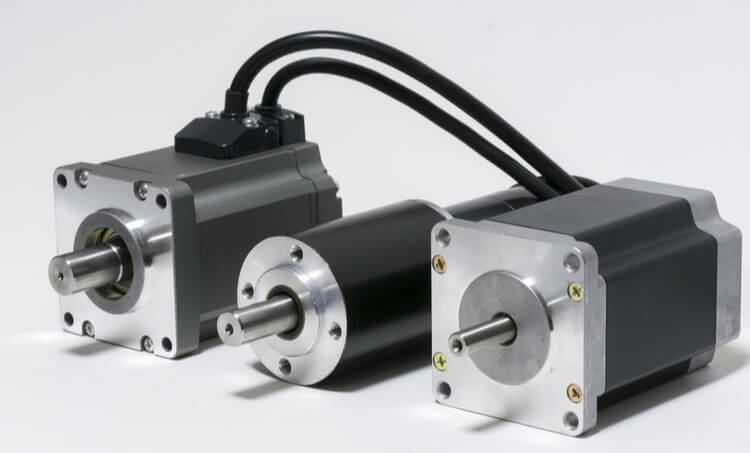
Can you explain the difference between single-phase and three-phase AC motors?
In the realm of AC motors, there are two primary types: single-phase and three-phase motors. These motors differ in their construction, operation, and applications. Let’s explore the differences between single-phase and three-phase AC motors:
- Number of Power Phases: The fundamental distinction between single-phase and three-phase motors lies in the number of power phases they require. Single-phase motors operate using a single alternating current (AC) power phase, while three-phase motors require three distinct AC power phases, typically referred to as phase A, phase B, and phase C.
- Power Supply: Single-phase motors are commonly connected to standard residential or commercial single-phase power supplies. These power supplies deliver a voltage with a sinusoidal waveform, oscillating between positive and negative cycles. In contrast, three-phase motors require a dedicated three-phase power supply, typically found in industrial or commercial settings. Three-phase power supplies deliver three separate sinusoidal waveforms with a specific phase shift between them, resulting in a more balanced and efficient power delivery system.
- Starting Mechanism: Single-phase motors often rely on auxiliary components, such as capacitors or starting windings, to initiate rotation. These components help create a rotating magnetic field necessary for motor startup. Once the motor reaches a certain speed, these auxiliary components may be disconnected or deactivated. Three-phase motors, on the other hand, typically do not require additional starting mechanisms. The three-phase power supply inherently generates a rotating magnetic field, enabling self-starting capability.
- Power and Torque Output: Three-phase motors generally offer higher power and torque output compared to single-phase motors. The balanced nature of three-phase power supply allows for a more efficient distribution of power across the motor windings, resulting in increased performance capabilities. Three-phase motors are commonly used in applications requiring high power demands, such as industrial machinery, pumps, compressors, and heavy-duty equipment. Single-phase motors, with their lower power output, are often used in residential appliances, small commercial applications, and light-duty machinery.
- Efficiency and Smoothness of Operation: Three-phase motors typically exhibit higher efficiency and smoother operation than single-phase motors. The balanced three-phase power supply helps reduce electrical losses and provides a more constant and uniform torque output. This results in improved motor efficiency, reduced vibration, and smoother rotation. Single-phase motors, due to their unbalanced power supply, may experience more pronounced torque variations and slightly lower efficiency.
- Application Suitability: The choice between single-phase and three-phase motors depends on the specific application requirements. Single-phase motors are suitable for powering smaller appliances, such as fans, pumps, household appliances, and small tools. They are commonly used in residential settings where single-phase power is readily available. Three-phase motors are well-suited for industrial and commercial applications that demand higher power levels and continuous operation, including large machinery, conveyors, elevators, air conditioning systems, and industrial pumps.
It’s important to note that while single-phase and three-phase motors have distinct characteristics, there are also hybrid motor designs, such as dual-voltage motors or capacitor-start induction-run (CSIR) motors, which aim to bridge the gap between the two types and offer flexibility in certain applications.
When selecting an AC motor, it is crucial to consider the specific power requirements, available power supply, and intended application to determine whether a single-phase or three-phase motor is most suitable for the task at hand.
AC モーターの基本的な動作原理を説明していただけますか?
ACモーターは電磁誘導の原理に基づいて動作します。磁界の相互作用を通じて電気エネルギーを機械エネルギーに変換します。ACモーターの基本的な動作原理は以下のとおりです。
- ACモーターは、ステータとローターという2つの主要部品で構成されています。ステータはモーターの固定部分であり、ステータ巻線が内蔵されています。ローターはモーターの回転部分であり、シャフトに接続されています。
- 交流電流 (AC) がステータ巻線に供給されると、変化する磁場が生成されます。
- 変化する磁場により、短絡した導電性のバーまたはコイルであるローター巻線に電圧が発生します。
- ローター巻線の誘導電圧により、ローター内に磁場が生成されます。
- ローターの磁場はステーターの回転磁場と相互作用し、トルク力を生み出します。
- トルク力によりローターが回転し、接続されたシャフトに機械的エネルギーが伝達されます。
- ステーター巻線に交流電源が供給されている限り、ローターの回転は継続します。
この基本的な動作原理は、誘導モーターや同期モーターなど、様々なタイプの交流モーターに適用できます。ただし、モーターの具体的な構造と設計は、モーターの種類や用途によって異なる場合があります。


editor by CX 2024-04-09


