
Deskripsi Produk
Product application:
Y series LV motors are CHINAMFG motors, they are used to drive Blowers, Compressor, Pumps, Crusher, Stock-removings and other general-purpose machinery. They can serve as the prime movers in power plants, steel, coal mines, mechanical industries etc field.
Product attribute:
Frame size: H355~710mm
Power range: 185kW~4000kW
Poles: 2~16
Rated voltage: 380~1140V
Frequency: 50Hz\60Hz
Insulation class: F,H
Degree of protection: IP23
Mounting arrangemnt: IMB3,V1
Cooling method: IC01
Type duty: S1
The motor has such advantage as high efficiency, energy-saving, low noise, low vibration, light weight and reliable performance. They are easy for installation and maintenance.
| Induction Electric Motors Type Y2(355~450) | ||||||||||||||
| Height of an axis, mm | Power, kW at frequency of rotation | The size of a shaft, mm at frequency of rotation | The connecting sizes, mm | |||||||||||
| 2р=2 | 2р=4 | 2р=6 | 2р=8 | 2p=2 | others | |||||||||
| H | 3000 | 1500 | 1000 | 750 | DxE | B | C | A | K | M | nxS | P | N | |
| min -1 | min -1 | min -1 | min -1 | |||||||||||
| 3551 | 355 | 355 | 280 | 220 | 80×170 | 110×210 | 800 | 224 | 630 | 35 | 840 | 8×24 | 900 | 780 |
| 3552 | 400 | 400 | 315 | 250 | ||||||||||
| 3553 | 450 | 450 | 355 | 315 | ||||||||||
| 400M1 | 355 | 355 | 280 | 250 | 85×170 | 110×210 | 630 | 280 | 686 | 35 | 940 | 8×28 | 1000 | 880 |
| 400M2 | 400 | 400 | 315 | 280 | ||||||||||
| 400M3 | 450 | 450 | 355 | x | ||||||||||
| 400L1 | 500 | 500 | 380 | 315 | 710 | |||||||||
| 400L2 | 560 | 560 | 400 | 355 | ||||||||||
| 400L3 | x | x | 450 | 400 | ||||||||||
| 4501 | x | 630 | 500 | 400 | 95×170 | 130×210 | 1000 | 250 | 800 | 42 | 1080 | 8×28 | 1150 | 1000 |
| 4502 | x | 710 | 560 | 450 | ||||||||||
| 4503 | x | 800 | 630 | 500 | ||||||||||
| 4504 | x | 900 | 710 | 560 | ||||||||||
| Aplikasi: | Industrial, Power Tools |
|---|---|
| Kecepatan Operasi: | Kecepatan Konstan |
| Jumlah Stator: | Tiga Fase |
| Jenis: | Ykk |
| Struktur Rotor: | Sangkar Tupai |
| Perlindungan Casing: | Jenis Perlindungan |
| Kustomisasi: |
Tersedia
|
|
|---|
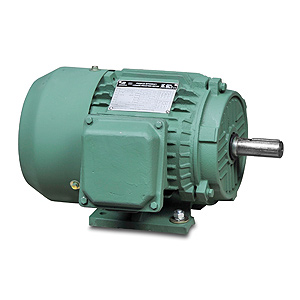
Bagaimana penggerak frekuensi variabel (VFD) memengaruhi kinerja motor AC?
Penggerak frekuensi variabel (VFD) memiliki dampak signifikan pada kinerja motor AC. VFD, juga dikenal sebagai penggerak kecepatan variabel atau penggerak frekuensi yang dapat disesuaikan, adalah perangkat elektronik yang mengontrol kecepatan dan torsi motor AC dengan mengubah frekuensi dan tegangan daya yang disuplai ke motor. Mari kita jelajahi bagaimana VFD memengaruhi kinerja motor AC:
- Kontrol Kecepatan: Salah satu manfaat utama penggunaan VFD (Variable Frequency Drive) adalah kemampuannya untuk mengontrol kecepatan motor AC. Dengan menyesuaikan frekuensi dan tegangan yang diberikan ke motor, VFD memungkinkan kontrol kecepatan yang presisi dalam rentang yang luas. Kemampuan kontrol kecepatan ini memungkinkan pengoperasian motor yang lebih efisien, karena dapat dioperasikan pada kecepatan optimal untuk aplikasi tertentu. Hal ini juga memungkinkan pengoperasian kecepatan variabel, di mana kecepatan motor dapat disesuaikan berdasarkan kebutuhan beban, sehingga menghasilkan penghematan energi dan peningkatan kontrol proses.
- Efisiensi Energi: VFD (Variable Frequency Drive) berkontribusi pada peningkatan efisiensi energi motor AC. Dengan mengontrol kecepatan motor berdasarkan permintaan beban, VFD menghilangkan pemborosan energi yang terjadi ketika motor beroperasi pada kecepatan penuh bahkan ketika bebannya ringan. Kemampuan untuk mencocokkan kecepatan motor dengan beban yang dibutuhkan mengurangi konsumsi energi dan menghasilkan penghematan energi yang signifikan. Dalam aplikasi di mana beban sangat bervariasi, seperti sistem HVAC, pompa, dan kipas, VFD dapat memberikan peningkatan efisiensi energi yang substansial.
- Mulai dan Berhenti dengan Lembut: VFD (Variable Frequency Drive) menawarkan kemampuan start dan stop yang halus untuk motor AC. Alih-alih memulai atau menghentikan motor secara tiba-tiba, yang dapat menyebabkan tekanan mekanis dan gangguan listrik, VFD secara bertahap meningkatkan atau menurunkan kecepatan motor. Fitur start dan stop yang halus ini mengurangi keausan mekanis, memperpanjang umur motor, dan meminimalkan penurunan atau lonjakan tegangan dalam sistem listrik. Fitur ini juga menghilangkan kebutuhan akan perangkat mekanis tambahan, seperti starter motor atau rem, sehingga meningkatkan keandalan dan kinerja sistem secara keseluruhan.
- Kontrol Presisi dan Optimalisasi Proses: VFD (Variable Frequency Drive) memungkinkan kontrol yang presisi terhadap kinerja motor AC, sehingga memungkinkan kontrol proses yang optimal dalam berbagai aplikasi. Kemampuan untuk menyesuaikan kecepatan dan torsi motor dengan akurasi tinggi memungkinkan penyempurnaan parameter sistem, seperti laju aliran, tekanan, atau suhu. Kontrol presisi ini meningkatkan kinerja sistem secara keseluruhan, meningkatkan kualitas produk, dan dapat menghasilkan penghematan energi dengan menghilangkan inefisiensi atau kompensasi berlebihan.
- Kemampuan Perlindungan dan Diagnostik Motor: VFD (Variable Frequency Drive) menyediakan fitur perlindungan motor tingkat lanjut dan kemampuan diagnostik. VFD dapat memantau kondisi operasi motor, seperti suhu, arus, dan tegangan, serta mendeteksi kelainan atau kerusakan secara real-time. VFD kemudian dapat merespons dengan menyesuaikan parameter motor, mengeluarkan peringatan, atau memicu penghentian operasi untuk melindungi motor dari kerusakan. Fitur perlindungan dan diagnostik ini membantu mencegah kegagalan motor, mengurangi waktu henti, dan memungkinkan pemeliharaan prediktif, sehingga meningkatkan keandalan dan kinerja motor.
- Harmoni dan Kualitas Daya: VFD dapat menimbulkan harmonik dalam sistem kelistrikan karena sifat operasinya yang berupa pensaklaran. Harmonik adalah distorsi tegangan dan arus yang tidak diinginkan yang dapat memengaruhi kualitas daya dan menyebabkan masalah pada jaringan distribusi listrik. Namun, VFD modern seringkali menyertakan langkah-langkah mitigasi harmonik bawaan, seperti reaktor saluran atau filter harmonik, untuk meminimalkan harmonik dan memastikan kepatuhan terhadap standar kualitas daya.
Singkatnya, VFD (Variable Frequency Drive) memiliki dampak yang besar pada kinerja motor AC. VFD memungkinkan pengendalian kecepatan, meningkatkan efisiensi energi, menyediakan kemampuan start dan stop yang halus, memungkinkan kontrol presisi dan optimasi proses, menawarkan fitur perlindungan dan diagnostik motor, serta mengatasi pertimbangan kualitas daya. Penggunaan VFD dalam aplikasi motor AC dapat menghasilkan peningkatan kinerja sistem, penghematan energi, peningkatan keandalan, dan peningkatan kontrol atas berbagai proses industri dan komersial.
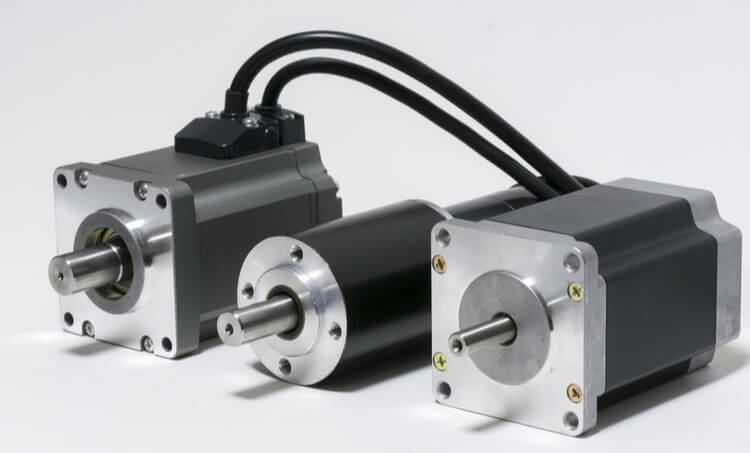
Can you explain the difference between single-phase and three-phase AC motors?
In the realm of AC motors, there are two primary types: single-phase and three-phase motors. These motors differ in their construction, operation, and applications. Let’s explore the differences between single-phase and three-phase AC motors:
- Number of Power Phases: The fundamental distinction between single-phase and three-phase motors lies in the number of power phases they require. Single-phase motors operate using a single alternating current (AC) power phase, while three-phase motors require three distinct AC power phases, typically referred to as phase A, phase B, and phase C.
- Power Supply: Single-phase motors are commonly connected to standard residential or commercial single-phase power supplies. These power supplies deliver a voltage with a sinusoidal waveform, oscillating between positive and negative cycles. In contrast, three-phase motors require a dedicated three-phase power supply, typically found in industrial or commercial settings. Three-phase power supplies deliver three separate sinusoidal waveforms with a specific phase shift between them, resulting in a more balanced and efficient power delivery system.
- Starting Mechanism: Single-phase motors often rely on auxiliary components, such as capacitors or starting windings, to initiate rotation. These components help create a rotating magnetic field necessary for motor startup. Once the motor reaches a certain speed, these auxiliary components may be disconnected or deactivated. Three-phase motors, on the other hand, typically do not require additional starting mechanisms. The three-phase power supply inherently generates a rotating magnetic field, enabling self-starting capability.
- Power and Torque Output: Three-phase motors generally offer higher power and torque output compared to single-phase motors. The balanced nature of three-phase power supply allows for a more efficient distribution of power across the motor windings, resulting in increased performance capabilities. Three-phase motors are commonly used in applications requiring high power demands, such as industrial machinery, pumps, compressors, and heavy-duty equipment. Single-phase motors, with their lower power output, are often used in residential appliances, small commercial applications, and light-duty machinery.
- Efficiency and Smoothness of Operation: Three-phase motors typically exhibit higher efficiency and smoother operation than single-phase motors. The balanced three-phase power supply helps reduce electrical losses and provides a more constant and uniform torque output. This results in improved motor efficiency, reduced vibration, and smoother rotation. Single-phase motors, due to their unbalanced power supply, may experience more pronounced torque variations and slightly lower efficiency.
- Application Suitability: The choice between single-phase and three-phase motors depends on the specific application requirements. Single-phase motors are suitable for powering smaller appliances, such as fans, pumps, household appliances, and small tools. They are commonly used in residential settings where single-phase power is readily available. Three-phase motors are well-suited for industrial and commercial applications that demand higher power levels and continuous operation, including large machinery, conveyors, elevators, air conditioning systems, and industrial pumps.
It’s important to note that while single-phase and three-phase motors have distinct characteristics, there are also hybrid motor designs, such as dual-voltage motors or capacitor-start induction-run (CSIR) motors, which aim to bridge the gap between the two types and offer flexibility in certain applications.
When selecting an AC motor, it is crucial to consider the specific power requirements, available power supply, and intended application to determine whether a single-phase or three-phase motor is most suitable for the task at hand.
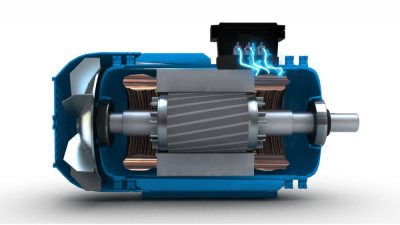
What are the key advantages of using AC motors in industrial applications?
AC motors offer several key advantages that make them highly suitable for industrial applications. Here are some of the main advantages:
- Simple and Robust Design: AC motors, particularly induction motors, have a simple and robust design, making them reliable and easy to maintain. They consist of fewer moving parts compared to other types of motors, which reduces the likelihood of mechanical failure and the need for frequent maintenance.
- Wide Range of Power Ratings: AC motors are available in a wide range of power ratings, from small fractional horsepower motors to large industrial motors with several megawatts of power. This versatility allows for their application in various industrial processes and machinery, catering to different power requirements.
- High Efficiency: AC motors, especially modern designs, offer high levels of efficiency. They convert electrical energy into mechanical energy with minimal energy loss, resulting in cost savings and reduced environmental impact. High efficiency also means less heat generation, contributing to the longevity and reliability of the motor.
- Cost-Effectiveness: AC motors are generally cost-effective compared to other types of motors. Their simple construction and widespread use contribute to economies of scale, making them more affordable for industrial applications. Additionally, AC motors often have lower installation and maintenance costs due to their robust design and ease of operation.
- Flexible Speed Control: AC motors, particularly induction motors, offer various methods for speed control, allowing for precise adjustment of motor speed to meet specific industrial requirements. Speed control mechanisms such as variable frequency drives (VFDs) enable enhanced process control, energy savings, and improved productivity.
- Compatibility with AC Power Grid: AC motors are compatible with the standard AC power grid, which is widely available in industrial settings. This compatibility simplifies the motor installation process and eliminates the need for additional power conversion equipment, reducing complexity and cost.
- Adaptability to Various Environments: AC motors are designed to operate reliably in a wide range of environments. They can withstand variations in temperature, humidity, and dust levels commonly encountered in industrial settings. Additionally, AC motors can be equipped with protective enclosures to provide additional resistance to harsh conditions.
These advantages make AC motors a popular choice for industrial applications across various industries. Their simplicity, reliability, cost-effectiveness, energy efficiency, and speed control capabilities contribute to improved productivity, reduced operational costs, and enhanced process control in industrial settings.


editor by CX 2023-10-23


