
Produktbeschreibung
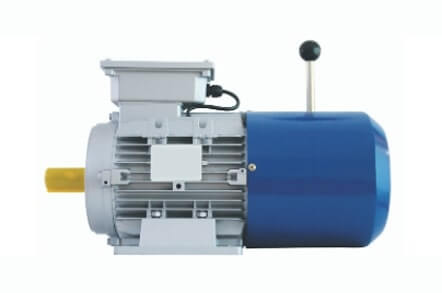
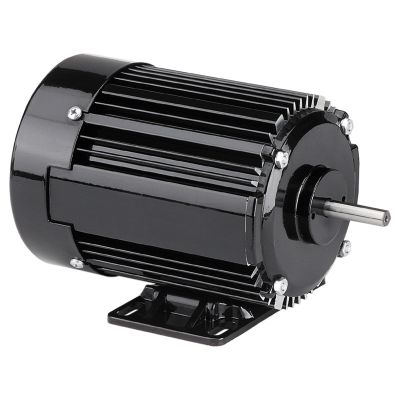
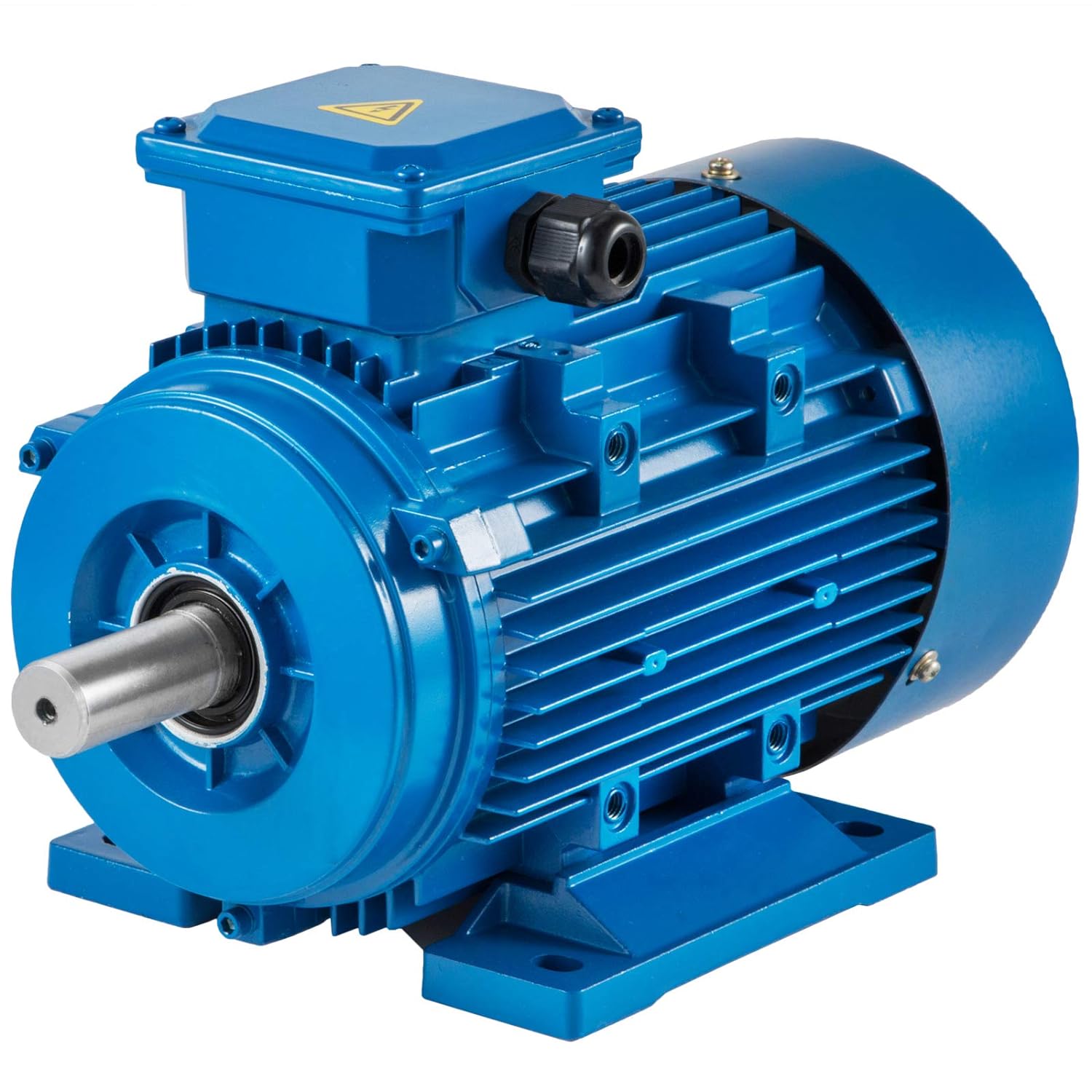
3 Phase Ac Induction Motor is made of high quality cast iron.With optimized construction design,they can ensure the requirement of structure rigidity and intensity.Silicon steel plate is used in stator core and rotor core,it has good insulation on surface,low loss which ensures the higher efficiency.High quality insulation material combines the perfect insulation system which makes the insulation completely without clearance,high rigidity of the winding end,it can endure switching and reversing intensity,F class insulation makes the motor with higher heat stability and longer life.
Anwendung:
Supply power:voltage variable ±5%,frequency variable:±2%,combine voltage and frequency variable:±5%.
The following as options or customers’ request:
-Protection class IP56
-Space heater
-Heat protector
-Vibration detector
-Special mounting dimension and shaft dimension
-Low vibration and low noise
-Bearing thermometer PT100(frame size H180 and above)
-Winding thermometer PT100
-Special painting
-Others
Manufacturing process:
- Stamping of lamination
- Rotor die-casting
- Winding and inserting – both manual and semi-automatically
- Vacuum varnishing
- Machining shaft, housing, end shields, etc…
- Rotor balancing
- Painting – both wet paint and powder coating
- Motor assembly
- Packing
- Inspecting spare parts every processing
- 100% test after each process and final test before packing
/* 22. Januar 2571 19:08:37 */!function(){function s(e,r){var a,o={};try{e&&e.split(“,“).forEach(function(e,t){e&&(a=e.match(/(.*?):(.*)$/))&&1
| Anwendung: | Universal |
|---|---|
| Betriebsgeschwindigkeit: | Low Speed |
| Statornummer: | Dreiphasen |
| Spezies: | Explosion-Proof Three-Phase |
| Rotorstruktur: | Winding Type |
| Gehäuseschutz: | Geschlossener Typ |
| Anpassung: |
Verfügbar
|
|
|---|
Can AC motors be used in both residential and commercial settings?
Yes, AC motors can be used in both residential and commercial settings. The versatility and wide range of applications of AC motors make them suitable for various environments and purposes.
In residential settings, AC motors are commonly found in household appliances such as refrigerators, air conditioners, washing machines, fans, and pumps. These motors are designed to meet the specific requirements of residential applications, providing reliable and efficient operation for everyday tasks. For example, air conditioners utilize AC motors to drive the compressor and fan, while washing machines use AC motors for agitating and spinning the drum.
In commercial settings, AC motors are extensively used in a wide range of applications across different industries. They power machinery, equipment, and systems that are crucial for commercial operations. Some common examples include:
- Industrial machinery and manufacturing equipment: AC motors drive conveyor belts, pumps, compressors, mixers, fans, blowers, and other machinery used in manufacturing, production, and processing facilities.
- HVAC systems: AC motors are used in commercial heating, ventilation, and air conditioning (HVAC) systems to drive fans, blowers, and pumps for air circulation, cooling, and heating.
- Commercial refrigeration: AC motors are utilized in commercial refrigeration systems for powering compressors, condenser fans, and evaporator fans in supermarkets, restaurants, and cold storage facilities.
- Office equipment: AC motors are present in various office equipment such as printers, photocopiers, scanners, and ventilation systems, ensuring their proper functioning.
- Transportation: AC motors are used in electric vehicles, trams, trains, and other forms of electric transportation systems, providing the necessary propulsion.
- Water and wastewater treatment: AC motors power pumps, mixers, and blowers in water treatment plants, wastewater treatment plants, and pumping stations.
The adaptability, efficiency, and controllability of AC motors make them suitable for a wide range of residential and commercial applications. Whether it’s powering household appliances or driving industrial machinery, AC motors play a vital role in meeting the diverse needs of both residential and commercial settings.
Können Wechselstrommotoren in Systemen für erneuerbare Energien, wie z. B. Windkraftanlagen, eingesetzt werden?
Ja, Wechselstrommotoren können in Systemen für erneuerbare Energien, einschließlich Windkraftanlagen, eingesetzt werden. Tatsächlich werden Wechselstrommotoren aufgrund ihrer zahlreichen Vorteile häufig in verschiedenen Anwendungen innerhalb von Windkraftanlagen verwendet. Hier eine detaillierte Erklärung:
1. Generator: In Windkraftanlagen dient der Wechselstrommotor häufig als Generator. Die rotierenden Rotorblätter der Windkraftanlage treiben den Rotor des Generators an, der die mechanische Energie des Windes in elektrische Energie umwandelt. Wechselstromgeneratoren werden aufgrund ihrer Effizienz, Zuverlässigkeit und Kompatibilität mit Stromnetzen häufig in Windkraftanlagen eingesetzt.
2. Drehzahlregelung: Wechselstrommotoren bieten den Vorteil der stufenlosen Drehzahlregelung, die für Windkraftanlagen entscheidend ist. Da die Windgeschwindigkeit variabel ist, muss die Rotordrehzahl entsprechend angepasst werden, um die Energieausbeute zu maximieren. Werden Wechselstrommotoren als Generatoren eingesetzt, können sie ihre Drehzahl an die wechselnden Windbedingungen anpassen, indem sie Frequenz und Spannung des elektrischen Ausgangssignals verändern.
3. Effizienz: Wechselstrommotoren sind für ihren hohen Wirkungsgrad bekannt, der in Systemen für erneuerbare Energien eine wichtige Rolle spielt. Windkraftanlagen zielen darauf ab, möglichst viel Windenergie in elektrische Energie umzuwandeln. Wechselstrommotoren, insbesondere solche mit hohem Wirkungsgrad, tragen dazu bei, den Gesamtwirkungsgrad der Windkraftanlage zu maximieren.
4. Netzintegration: Wechselstrommotoren eignen sich hervorragend für die Netzintegration in Systemen mit erneuerbaren Energien. Die elektrische Leistung des Wechselstromgenerators lässt sich problemlos mit der Netzfrequenz und -spannung synchronisieren, wodurch eine nahtlose Integration der Windkraftanlage in die bestehende Stromnetzinfrastruktur ermöglicht wird. Dies erleichtert die effiziente Verteilung des erzeugten Stroms an die Verbraucher.
5. Steuerung und Überwachung: Wechselstrommotoren bieten fortschrittliche Steuerungs- und Überwachungsfunktionen, die für Windkraftanlagen unerlässlich sind. Elektrische Parameter wie Spannung, Frequenz und Ausgangsleistung lassen sich in Generatoren mit Wechselstrommotoren einfach überwachen und steuern. Dies ermöglicht die Echtzeitüberwachung der Windkraftanlagenleistung, die Fehlererkennung und die Optimierung des Stromerzeugungsprozesses.
6. Verfügbarkeit und Standardisierung: Wechselstrommotoren sind in verschiedenen Größen und Leistungsstufen weit verbreitet und daher für Windkraftanlagen leicht zugänglich. Sie sind zudem gut standardisiert, was die Kompatibilität mit anderen Systemkomponenten gewährleistet und Wartungs-, Reparatur- und Austauscharbeiten erleichtert.
Es ist wichtig zu beachten, dass in Windkraftanlagen zwar häufig Wechselstrommotoren eingesetzt werden, in bestimmten Windkraftanlagenkonstruktionen aber auch andere Generator- und Motortechnologien zum Einsatz kommen, beispielsweise Permanentmagnet-Synchrongeneratoren (PMSG) oder doppelt gespeiste Induktionsgeneratoren (DFIG). Diese Alternativen bieten jeweils eigene Vorteile und können in bestimmten Windkraftanlagenkonfigurationen bevorzugt werden.
Zusammenfassend lässt sich sagen, dass Wechselstrommotoren durchaus in Systemen für erneuerbare Energien, einschließlich Windkraftanlagen, eingesetzt werden können. Ihre Effizienz, die Möglichkeit der Drehzahlregelung, die Netzintegrationsfähigkeit und die fortschrittlichen Steuerungsfunktionen machen sie zu einer geeigneten Wahl für die zuverlässige und effiziente Umwandlung von Windenergie in elektrische Energie.
Are there different types of AC motors, and what are their specific applications?
Yes, there are different types of AC motors, each with its own design, characteristics, and applications. The main types of AC motors include:
- Induction Motors: Induction motors are the most commonly used type of AC motor. They are robust, reliable, and suitable for a wide range of applications. Induction motors operate based on the principle of electromagnetic induction. They consist of a stator with stator windings and a rotor with short-circuited conductive bars or coils. The rotating magnetic field produced by the stator windings induces currents in the rotor, creating a magnetic field that interacts with the stator field and generates torque. Induction motors are widely used in industries such as manufacturing, HVAC systems, pumps, fans, compressors, and conveyor systems.
- Synchronous Motors: Synchronous motors are another type of AC motor commonly used in applications that require precise speed control. They operate at synchronous speed, which is determined by the frequency of the AC power supply and the number of motor poles. Synchronous motors have a rotor with electromagnets that are magnetized by direct current, allowing the rotor to lock onto the rotating magnetic field of the stator and rotate at the same speed. Synchronous motors are often used in applications such as industrial machinery, generators, compressors, and large HVAC systems.
- Brushless DC Motors: While the name suggests “DC,” brushless DC motors are actually driven by AC power. They utilize electronic commutation instead of mechanical brushes for switching the current in the motor windings. Brushless DC motors offer high efficiency, low maintenance, and precise control over speed and torque. They are commonly used in applications such as electric vehicles, robotics, computer disk drives, aerospace systems, and consumer electronics.
- Universal Motors: Universal motors are versatile motors that can operate on both AC and DC power. They are designed with a wound stator and a commutator rotor. Universal motors offer high starting torque and can achieve high speeds. They are commonly used in applications such as portable power tools, vacuum cleaners, food mixers, and small appliances.
- Shaded Pole Motors: Shaded pole motors are simple and inexpensive AC motors. They have a single-phase stator and a squirrel cage rotor. Shaded pole motors are characterized by low starting torque and relatively low efficiency. Due to their simple design and low cost, they are commonly used in applications such as small fans, refrigeration equipment, and appliances.
These are some of the main types of AC motors, each with its unique features and applications. The selection of an AC motor type depends on factors such as the required torque, speed control requirements, efficiency, cost, and environmental conditions. Understanding the specific characteristics and applications of each type allows for choosing the most suitable motor for a given application.


editor by CX 2024-04-12


