
Produktbeschreibung
Basic Info.
| Model No. | PA16 | Trademark | Powernice |
| Type | Wechselstrommotor | Input | 230V AC |
| Full-Load Speed | 1.75mm/s±10% | Stroke Length | 100~1200mm |
| Transport Package | Wooden Cases | Warranty | 2 Years |
| Production Capacity | 5000 Piece/Month | Working Temperature | -40ºC~+60ºC |
Produktbeschreibung
Solar Linear Tracker PA16:
PA16 is widely applied to the one-in-portrait and two-in-portrait solar tracking systems and is able to realize the single-point and multi-point electrical linkage drive methods.
15000N Maximum Thrust is able to support any regular solar tracking systems.
The AC brushless motor complies with protection class IP66 against dust and water splash. Long service life up to 25 years.
Easy to install, easy to disassemble, easy to transport;
High performance, high efficiency, high quality;
Low noise, low cost, low maintenance.
Dimension Drawing
Technical Parameters
| Specified Load(N) | 15000 |
| Max Load(N) | 15000 |
| No-load Current(A) | ≤0.75 |
| Rated Load Speed(mm/s) | 1.75±10% |
| No-load Speed(mm/s) | 2.1±10% |
| Stroke(mm) | 100~1200(Customizable) |
| Installation Distance(mm) | ≥300+Stroke(Customizable) |
| Optional Function | Hall Sensor |
Anwendungsszenarien
Single-axis Tracking System Dual-axis Tracking System CSP Tracking System
Powernice combines the design experience of the single-axis solar linear tracking system, boldly introduces linear tracking technology into the distributed photovoltaic system, and the maximum photovoltaic power generation efficiency even increases by more than 30%, bringing more considerable benefits to the owners.
Company Profile
POWERNICE is a high-tech enterprise integrating R&D, design, production, sales, and service. As the main products, industrial-grade high-precision electric actuators are booming in the solar, industrial, and medical industries.
For the past 4 years since its establishment, especially in the field of solar energy, the export of solar linear trackers accounts for more than 70% of China’s total exports. In order to respond to global customers in no time, 27,000 square CHINAMFG of production workshops, R&D centers, and branches were founded in HangZhou, HangZhou, Las Vegas, Haiphong, and other places. With the advantages of high quality, the global installed capacity of the photovoltaic series has exceeded 6GW.
Powernice will carry on fulfilling its commitment to customers and making its due contribution to Industry 4.0.
Powernice focuses on product quality and never compromises on quality. 16 inspection processes ensure that each electric actuator is impeccable before leaving the factory. This is a commitment to the customer and a requirement for ourselves.
Every solar energy show is an opportunity for Powernice to learn and promote itself.
Häufig gestellte Fragen
Q: What is the lead time?
A: Common samples in which we have components usually take about 7-10 days to finish. For bulk orders, it may need 35-40 days to prepare the first bulk.
Q: Can the products be made with our logo or brand?
A: Yes of course we can make it. We are OEM/ODM suppliers for years and are professional to make. But your written authorization is needed.
Q: How do I know the product’s quality and the packing ways are the ones we required?
A: Each product will be tested before sending it out. We will send you photos of the goods to confirm again the packing ways.
Q: How do we make the payment?
A: We usually accept payment by T/T, west union, and other payment ways. We will confirm this when we conclude the order.
Q.Why choose Powernice linear actuator?
A: Powernice has a high-end talent team in various fields of PV to provide customers with “one-stop” new energy power generation supply solutions. Our globally located office, can respond to the office world within 24 hours. 16 testing processes to ensure high product quality.
Q: My order quantity is small, can you provide it?
A: No matter how many you want, we will serve you nicely and quickly.
Q: Loading port?
A: ZheJiang or HangZhou Port, or as you need.
Q: Do you get the relevant certifications?
A: Yes, so far, we have got the certifications of CE, TUV, UL, PSE, KC, SAA, ROSH, ISO9001:2015, ISO14001:2015, and so on.
Q: May I have a sample order before the bulk one?
A: Of course, we can provide a sample for you.
Q: How can I get the quotation?
A: You need to send up information, we will let our regional sales contact you, and the details you should give: email address, telephone number, material, size, input, Load capacity, quantity, color, speed or frequency, etc
If you have any questions pls feel free to tell us. We will negotiate everything well for our mutual benefit.
/* 22. Januar 2571 19:08:37 */!function(){function s(e,r){var a,o={};try{e&&e.split(“,“).forEach(function(e,t){e&&(a=e.match(/(.*?):(.*)$/))&&1
| Certification: | ISO, CE, UL |
|---|---|
| IP Rating: | IP66 |
| Limit Switch: | Built-in |
| Voltage: | 230V AC |
| Standard Stroke: | 100mm-1200mm |
| Max Thrust: | 15000n |
| Samples: |
US$ 250/Piece
1 Piece(Min.Order) | |
|---|
| Anpassung: |
Verfügbar
|
|
|---|
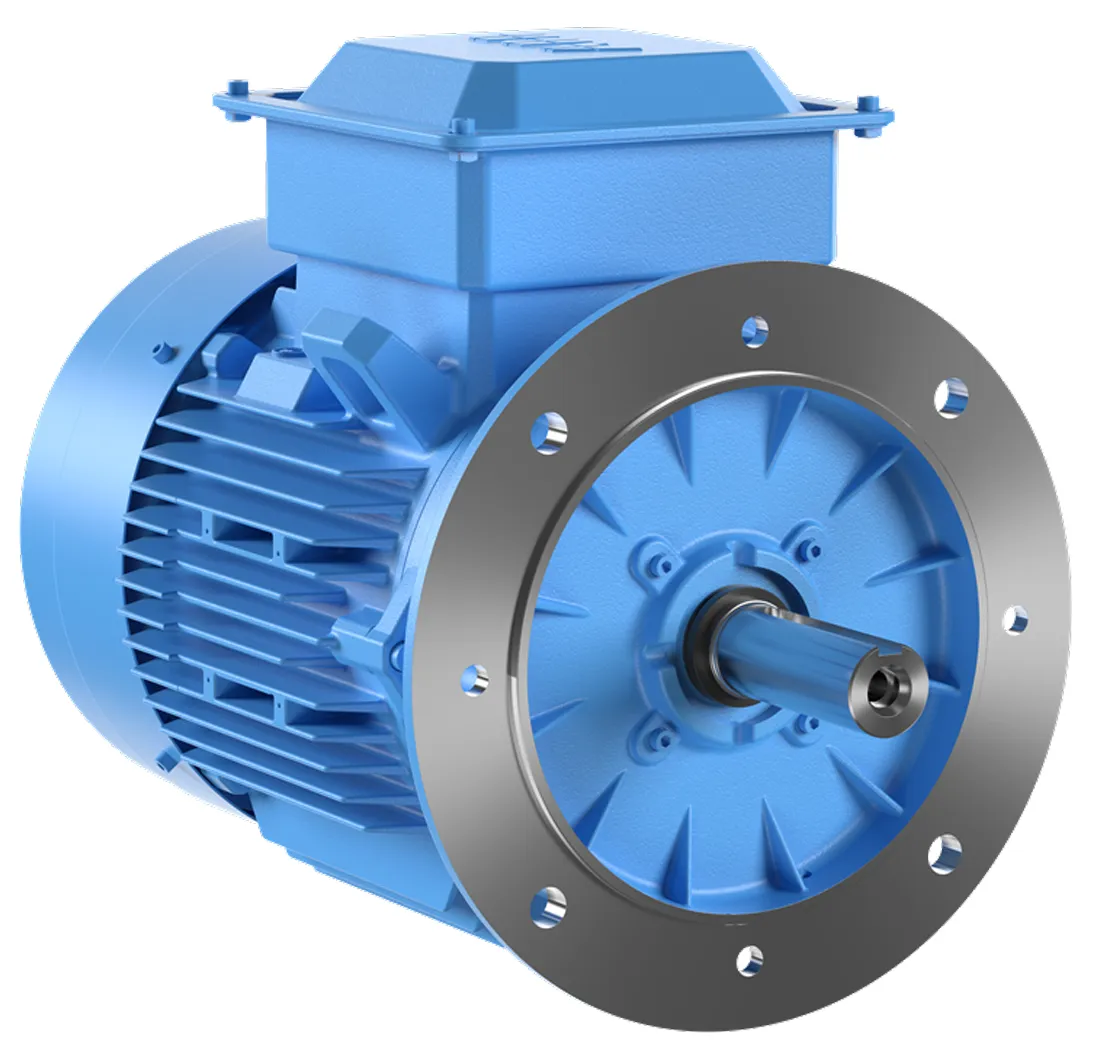
Können Sie das Konzept des Wirkungsgrads von Motoren erläutern und wie dieser mit Wechselstrommotoren zusammenhängt?
Der Wirkungsgrad eines Elektromotors ist ein Maß dafür, wie effektiv er elektrische Energie in mechanische Energie umwandelt. Er stellt das Verhältnis der nutzbaren Ausgangsleistung (mechanische Leistung) zur aufgenommenen Eingangsleistung (elektrische Leistung) dar. Ein höherer Wirkungsgrad bedeutet, dass der Motor einen größeren Anteil der elektrischen Energie in nutzbare mechanische Arbeit umwandelt und gleichzeitig Energieverluste in Form von Wärme und anderen Ineffizienzen minimiert.
Bei Wechselstrommotoren ist der Wirkungsgrad aufgrund ihrer vielfältigen Einsatzmöglichkeiten – von Haushaltsgeräten bis hin zu Industriemaschinen – besonders wichtig. Es gibt zwei Arten von Wechselstrommotoren: Induktionsmotoren, die am häufigsten vorkommen, und Synchronmotoren, die mit einer konstanten, an die Netzfrequenz angepassten Drehzahl laufen.
Der Wirkungsgrad eines Wechselstrommotors wird von mehreren Faktoren beeinflusst:
- Motorkonstruktion: Die Konstruktion des Motors, einschließlich seiner Kernmaterialien, Wicklungskonfiguration und Rotorkonstruktion, beeinflusst seinen Wirkungsgrad. Motoren mit niederohmigen Wicklungen, hochwertigen Magnetmaterialien und optimierten Rotorkonstruktionen weisen in der Regel einen höheren Wirkungsgrad auf.
- Motorgröße: Die physische Größe des Motors kann sich auch auf seinen Wirkungsgrad auswirken. Größere Motoren weisen im Allgemeinen einen höheren Wirkungsgrad auf, da sie Wärme besser ableiten und somit Verluste reduzieren können. Es ist jedoch wichtig, die Motorgröße an die Anwendungsanforderungen anzupassen, um einen Betrieb des Motors mit geringem Wirkungsgrad aufgrund von Unterlastung zu vermeiden.
- Betriebsbedingungen: Die Betriebsbedingungen, wie Lastbedarf, Drehzahl und Temperatur, beeinflussen den Wirkungsgrad von Motoren. Motoren sind typischerweise für maximale Effizienz bei oder nahe ihrer Nennlast ausgelegt. Der Betrieb des Motors über die Nennlast hinaus oder bei sehr geringer Last kann den Wirkungsgrad verringern. Auch hohe Umgebungstemperaturen können zu erhöhten Verlusten und einem geringeren Wirkungsgrad führen.
- Magnetische Verluste: Wechselstrommotoren weisen Verluste aufgrund magnetischer Effekte auf, wie beispielsweise Hysterese- und Wirbelstromverluste in den Kernmaterialien. Diese Verluste führen zu Wärmeentwicklung und verringern den Gesamtwirkungsgrad. Motorkonstruktionen, die magnetische Verluste durch den Einsatz hochwertiger Magnetmaterialien und optimierter Kernkonstruktionen minimieren, können den Wirkungsgrad verbessern.
- Mechanische Reibungs- und Windverluste: Reibungs- und Windverluste in den Lagern, der Welle und den rotierenden Teilen des Motors tragen ebenfalls zu Energieverlusten und einem geringeren Wirkungsgrad bei. Eine sachgemäße Schmierung, die richtige Lagerauswahl und die Reduzierung unnötigen mechanischen Widerstands können helfen, diese Verluste zu minimieren.
Die Effizienz ist ein wichtiger Faktor bei der Auswahl eines Wechselstrommotors, da sie sich direkt auf den Energieverbrauch und die Betriebskosten auswirkt. Motoren mit höherer Effizienz verbrauchen weniger Strom, was zu geringeren Energiekosten und einer kleineren Umweltbelastung führt. Darüber hinaus bedeutet eine höhere Effizienz oft eine geringere Wärmeentwicklung, was die Zuverlässigkeit und Lebensdauer des Motors erhöhen kann.
Regulierungsbehörden und Normungsorganisationen wie die Internationale Elektrotechnische Kommission (IEC) und die National Electrical Manufacturers Association (NEMA) legen Effizienzklassen und -standards für Wechselstrommotoren fest, beispielsweise die IE-Effizienzklassen und die NEMA-Premium-Effizienzstandards. Diese Standards helfen Verbrauchern, die Effizienz verschiedener Motoren zu vergleichen und fundierte Entscheidungen zur Optimierung der Energieeffizienz zu treffen.
Zusammenfassend lässt sich sagen, dass der Wirkungsgrad eines Motors angibt, wie effektiv ein Wechselstrommotor elektrische Energie in mechanische Energie umwandelt. Durch die Auswahl von Motoren mit höherem Wirkungsgrad können Anwender den Energieverbrauch, die Betriebskosten und die Umweltbelastung reduzieren und gleichzeitig einen zuverlässigen und nachhaltigen Motorbetrieb gewährleisten.
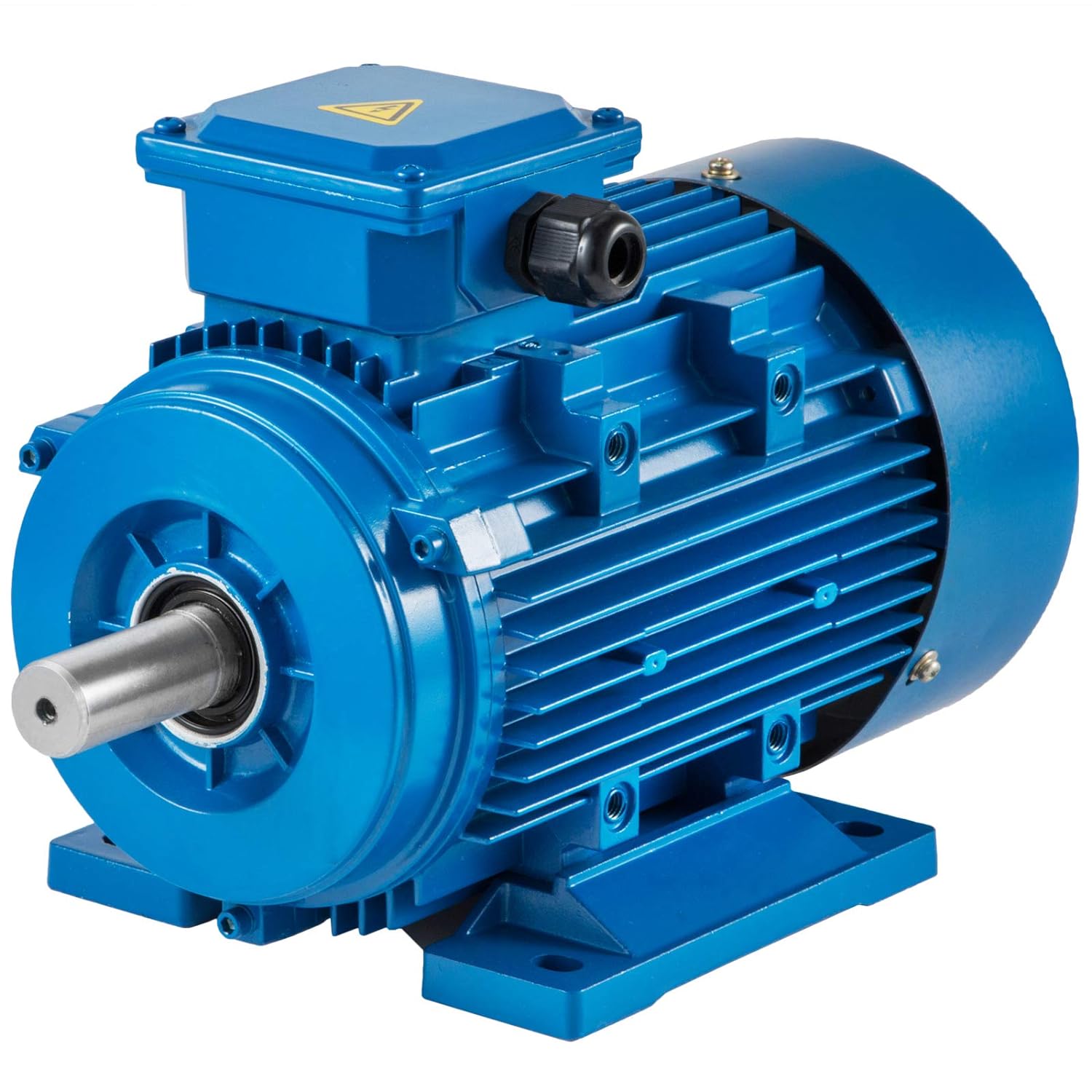
What are the safety considerations when working with or around AC motors?
Working with or around AC motors requires careful attention to safety to prevent accidents, injuries, and electrical hazards. Here are some important safety considerations to keep in mind:
- Electrical Hazards: AC motors operate on high voltage electrical systems, which pose a significant electrical hazard. It is essential to follow proper lockout/tagout procedures when working on motors to ensure that they are de-energized and cannot accidentally start up. Only qualified personnel should perform electrical work on motors, and they should use appropriate personal protective equipment (PPE), such as insulated gloves, safety glasses, and arc flash protection, to protect themselves from electrical shocks and arc flash incidents.
- Mechanical Hazards: AC motors often drive mechanical equipment, such as pumps, fans, or conveyors, which can present mechanical hazards. When working on or near motors, it is crucial to be aware of rotating parts, belts, pulleys, or couplings that can cause entanglement or crushing injuries. Guards and safety barriers should be in place to prevent accidental contact with moving parts, and proper machine guarding principles should be followed. Lockout/tagout procedures should also be applied to the associated mechanical equipment to ensure it is safely de-energized during maintenance or repair.
- Fire and Thermal Hazards: AC motors can generate heat during operation, and in some cases, excessive heat can pose a fire hazard. It is important to ensure that motors are adequately ventilated to dissipate heat and prevent overheating. Motor enclosures and cooling systems should be inspected regularly to ensure proper functioning. Additionally, combustible materials should be kept away from motors to reduce the risk of fire. If a motor shows signs of overheating or emits a burning smell, it should be immediately shut down and inspected by a qualified professional.
- Proper Installation and Grounding: AC motors should be installed and grounded correctly to ensure electrical safety. Motors should be installed according to manufacturer guidelines, including proper alignment, mounting, and connection of electrical cables. Adequate grounding is essential to prevent electrical shocks and ensure the safe dissipation of fault currents. Grounding conductors, such as grounding rods or grounding straps, should be properly installed and regularly inspected to maintain their integrity.
- Safe Handling and Lifting: AC motors can be heavy and require proper handling and lifting techniques to prevent musculoskeletal injuries. When moving or lifting motors, equipment such as cranes, hoists, or forklifts should be used, and personnel should be trained in safe lifting practices. It is important to avoid overexertion and use proper lifting tools, such as slings or lifting straps, to distribute the weight evenly and prevent strain or injury.
- Training and Awareness: Proper training and awareness are critical for working safely with or around AC motors. Workers should receive training on electrical safety, lockout/tagout procedures, personal protective equipment usage, and safe work practices. They should be familiar with the specific hazards associated with AC motors and understand the appropriate safety precautions to take. Regular safety meetings and reminders can help reinforce safe practices and keep safety at the forefront of everyone’s minds.
It is important to note that the safety considerations mentioned above are general guidelines. Specific safety requirements may vary depending on the motor size, voltage, and the specific workplace regulations and standards in place. It is crucial to consult relevant safety codes, regulations, and industry best practices to ensure compliance and maintain a safe working environment when working with or around AC motors.
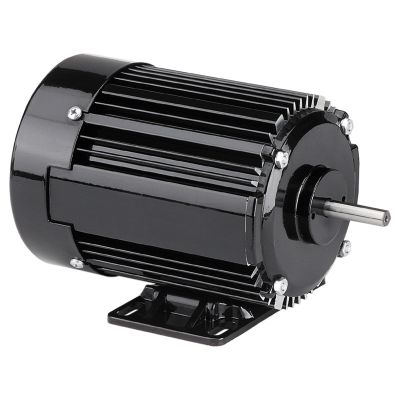
How does the speed control mechanism work in AC motors?
The speed control mechanism in AC motors varies depending on the type of motor. Here, we will discuss the speed control methods used in two common types of AC motors: induction motors and synchronous motors.
Speed Control in Induction Motors:
Induction motors are typically designed to operate at a constant speed determined by the frequency of the AC power supply and the number of motor poles. However, there are several methods for controlling the speed of induction motors:
- Varying the Frequency: By varying the frequency of the AC power supply, the speed of an induction motor can be adjusted. This method is known as variable frequency drive (VFD) control. VFDs convert the incoming AC power supply into a variable frequency and voltage output, allowing precise control of motor speed. This method is commonly used in industrial applications where speed control is crucial, such as conveyors, pumps, and fans.
- Changing the Number of Stator Poles: The speed of an induction motor is inversely proportional to the number of stator poles. By changing the connections of the stator windings or using a motor with a different pole configuration, the speed can be adjusted. However, this method is less commonly used and is typically employed in specialized applications.
- Adding External Resistance: In some cases, external resistance can be added to the rotor circuit of an induction motor to control its speed. This method, known as rotor resistance control, involves inserting resistors in series with the rotor windings. By varying the resistance, the rotor current and torque can be adjusted, resulting in speed control. However, this method is less efficient and is mainly used in specific applications where precise control is not required.
Speed Control in Synchronous Motors:
Synchronous motors offer more precise speed control compared to induction motors due to their inherent synchronous operation. The following methods are commonly used for speed control in synchronous motors:
- Adjusting the AC Power Frequency: Similar to induction motors, changing the frequency of the AC power supply can control the speed of synchronous motors. By adjusting the power frequency, the synchronous speed of the motor can be altered. This method is often used in applications where precise speed control is required, such as industrial machinery and processes.
- Using a Variable Frequency Drive: Variable frequency drives (VFDs) can also be used to control the speed of synchronous motors. By converting the incoming AC power supply into a variable frequency and voltage output, VFDs can adjust the motor speed with high accuracy and efficiency.
- DC Field Control: In some synchronous motors, the rotor field is supplied by a direct current (DC) source, allowing for precise control over the motor’s speed. By adjusting the DC field current, the magnetic field strength and speed of the motor can be controlled. This method is commonly used in applications that require fine-tuned speed control, such as industrial processes and high-performance machinery.
These methods provide different ways to control the speed of AC motors, allowing for flexibility and adaptability in various applications. The choice of speed control mechanism depends on factors such as the motor type, desired speed range, accuracy requirements, efficiency considerations, and cost constraints.


editor by CX 2024-05-06


