
Produktbeschreibung
Produktbeschreibung
Elevator Geared Traction Machine
General Information for the Elevator Motor
1. Type: VVVF asynchronous and geared
2. Traction Sheave Location: Optional for right or left
3. Load: 2000KG to 2500KG
4. Speed: 0.5m/s to 2.0m/s
5. Application: For new elevator or elevator modernization
Features for Geared VVVF Asynchronous Elevator Traction Machine
1. High efficiency
2. Stable and low noise
3. High static load capacity
|
Model |
NV41G |
|
Speed(m/s) |
0.5 – 2 |
|
Weight |
730kg |
|
Suspension |
1:1 |
|
Max.Static Load |
7500kg |
|
Control |
VVVF |
|
Brake |
DC110V 2A |
Product Parameters
|
Model |
Load |
Lift Speed |
Ratio |
Sheave Diam |
Rope Sheave |
Motor Power |
Pole |
|
NV41G |
800 |
1.6 |
59:2 |
Φ620 |
5×Φ13×20 |
12.5 |
4 |
|
NV41G |
800 |
1.75 |
55:2 |
Φ620 |
5×Φ13×20 |
15 |
4 |
|
NV41G |
800 |
2 |
49:2 |
Φ620 |
6×Φ13×20 |
18.5 |
4 |
|
NV41G |
1000 |
1 |
49:1 |
Φ620 |
5×Φ13×20 |
11 |
4 |
|
NV41G |
1000 |
1.6 |
59:2 |
Φ620 |
6×Φ13×20 |
18.5 |
4 |
|
NV41G |
1000 |
1.75 |
55:2 |
Φ620 |
6×Φ13×20 |
18.5 |
4 |
|
NV41G |
1000 |
2 |
49:2 |
Φ620 |
6×Φ13×20 |
18.5 |
4 |
|
NV41G |
1150 |
1 |
49:1 |
Φ620 |
6×Φ13×20 |
15 |
4 |
|
NV41G |
1150 |
1.6 |
59:2 |
Φ620 |
6×Φ13×20 |
18.5 |
4 |
|
NV41G |
1150 |
1.75 |
55:2 |
Φ620 |
6×Φ13×20 |
18.5 |
4 |
|
NV41G |
1150 |
2 |
49:2 |
Φ620 |
6×Φ13×20 |
22 |
4 |
Different Models
The worm geared asynchronous traction machine is combined by coupling to integrate worm reduction gearbox and 3 phase synchronous motor, with underlying worm, double push brake, dual support-stuctured traction sheave, VVVF controlled asynchronous motor and photoelectric encoder for operation status detecting and feedback.
Main Product Catalog
Company Profile
Exhibition
Packaging & Shipping
Why Choose Us
/* 22. Januar 2571 19:08:37 */!function(){function s(e,r){var a,o={};try{e&&e.split(“,“).forEach(function(e,t){e&&(a=e.match(/(.*?):(.*)$/))&&1
| After-sales Service: | Online |
|---|---|
| Warranty: | 24 Months |
| Type: | Elevator Traction Machine |
| Suitable for: | Elevator |
| Load Capacity: | 2000kg |
| Persons: | 11-20 |
| Anpassung: |
Verfügbar
|
|
|---|
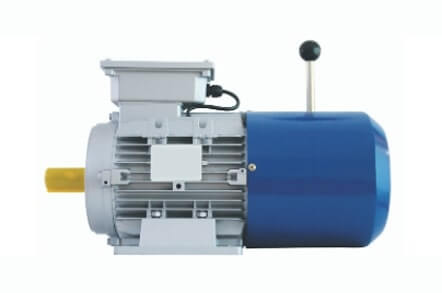
Can AC motors be used in both residential and commercial settings?
Yes, AC motors can be used in both residential and commercial settings. The versatility and wide range of applications of AC motors make them suitable for various environments and purposes.
In residential settings, AC motors are commonly found in household appliances such as refrigerators, air conditioners, washing machines, fans, and pumps. These motors are designed to meet the specific requirements of residential applications, providing reliable and efficient operation for everyday tasks. For example, air conditioners utilize AC motors to drive the compressor and fan, while washing machines use AC motors for agitating and spinning the drum.
In commercial settings, AC motors are extensively used in a wide range of applications across different industries. They power machinery, equipment, and systems that are crucial for commercial operations. Some common examples include:
- Industrial machinery and manufacturing equipment: AC motors drive conveyor belts, pumps, compressors, mixers, fans, blowers, and other machinery used in manufacturing, production, and processing facilities.
- HVAC systems: AC motors are used in commercial heating, ventilation, and air conditioning (HVAC) systems to drive fans, blowers, and pumps for air circulation, cooling, and heating.
- Commercial refrigeration: AC motors are utilized in commercial refrigeration systems for powering compressors, condenser fans, and evaporator fans in supermarkets, restaurants, and cold storage facilities.
- Office equipment: AC motors are present in various office equipment such as printers, photocopiers, scanners, and ventilation systems, ensuring their proper functioning.
- Transportation: AC motors are used in electric vehicles, trams, trains, and other forms of electric transportation systems, providing the necessary propulsion.
- Water and wastewater treatment: AC motors power pumps, mixers, and blowers in water treatment plants, wastewater treatment plants, and pumping stations.
The adaptability, efficiency, and controllability of AC motors make them suitable for a wide range of residential and commercial applications. Whether it’s powering household appliances or driving industrial machinery, AC motors play a vital role in meeting the diverse needs of both residential and commercial settings.
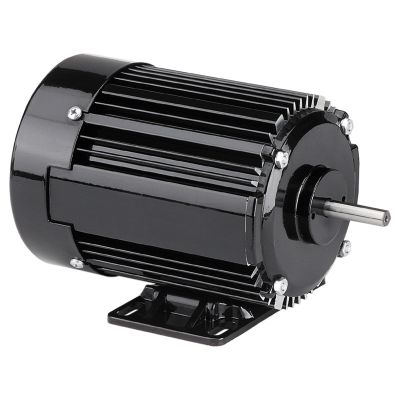
Können Wechselstrommotoren in Systemen für erneuerbare Energien, wie z. B. Windkraftanlagen, eingesetzt werden?
Ja, Wechselstrommotoren können in Systemen für erneuerbare Energien, einschließlich Windkraftanlagen, eingesetzt werden. Tatsächlich werden Wechselstrommotoren aufgrund ihrer zahlreichen Vorteile häufig in verschiedenen Anwendungen innerhalb von Windkraftanlagen verwendet. Hier eine detaillierte Erklärung:
1. Generator: In Windkraftanlagen dient der Wechselstrommotor häufig als Generator. Die rotierenden Rotorblätter der Windkraftanlage treiben den Rotor des Generators an, der die mechanische Energie des Windes in elektrische Energie umwandelt. Wechselstromgeneratoren werden aufgrund ihrer Effizienz, Zuverlässigkeit und Kompatibilität mit Stromnetzen häufig in Windkraftanlagen eingesetzt.
2. Drehzahlregelung: Wechselstrommotoren bieten den Vorteil der stufenlosen Drehzahlregelung, die für Windkraftanlagen entscheidend ist. Da die Windgeschwindigkeit variabel ist, muss die Rotordrehzahl entsprechend angepasst werden, um die Energieausbeute zu maximieren. Werden Wechselstrommotoren als Generatoren eingesetzt, können sie ihre Drehzahl an die wechselnden Windbedingungen anpassen, indem sie Frequenz und Spannung des elektrischen Ausgangssignals verändern.
3. Effizienz: Wechselstrommotoren sind für ihren hohen Wirkungsgrad bekannt, der in Systemen für erneuerbare Energien eine wichtige Rolle spielt. Windkraftanlagen zielen darauf ab, möglichst viel Windenergie in elektrische Energie umzuwandeln. Wechselstrommotoren, insbesondere solche mit hohem Wirkungsgrad, tragen dazu bei, den Gesamtwirkungsgrad der Windkraftanlage zu maximieren.
4. Netzintegration: Wechselstrommotoren eignen sich hervorragend für die Netzintegration in Systemen mit erneuerbaren Energien. Die elektrische Leistung des Wechselstromgenerators lässt sich problemlos mit der Netzfrequenz und -spannung synchronisieren, wodurch eine nahtlose Integration der Windkraftanlage in die bestehende Stromnetzinfrastruktur ermöglicht wird. Dies erleichtert die effiziente Verteilung des erzeugten Stroms an die Verbraucher.
5. Steuerung und Überwachung: Wechselstrommotoren bieten fortschrittliche Steuerungs- und Überwachungsfunktionen, die für Windkraftanlagen unerlässlich sind. Elektrische Parameter wie Spannung, Frequenz und Ausgangsleistung lassen sich in Generatoren mit Wechselstrommotoren einfach überwachen und steuern. Dies ermöglicht die Echtzeitüberwachung der Windkraftanlagenleistung, die Fehlererkennung und die Optimierung des Stromerzeugungsprozesses.
6. Verfügbarkeit und Standardisierung: Wechselstrommotoren sind in verschiedenen Größen und Leistungsstufen weit verbreitet und daher für Windkraftanlagen leicht zugänglich. Sie sind zudem gut standardisiert, was die Kompatibilität mit anderen Systemkomponenten gewährleistet und Wartungs-, Reparatur- und Austauscharbeiten erleichtert.
Es ist wichtig zu beachten, dass in Windkraftanlagen zwar häufig Wechselstrommotoren eingesetzt werden, in bestimmten Windkraftanlagenkonstruktionen aber auch andere Generator- und Motortechnologien zum Einsatz kommen, beispielsweise Permanentmagnet-Synchrongeneratoren (PMSG) oder doppelt gespeiste Induktionsgeneratoren (DFIG). Diese Alternativen bieten jeweils eigene Vorteile und können in bestimmten Windkraftanlagenkonfigurationen bevorzugt werden.
Zusammenfassend lässt sich sagen, dass Wechselstrommotoren durchaus in Systemen für erneuerbare Energien, einschließlich Windkraftanlagen, eingesetzt werden können. Ihre Effizienz, die Möglichkeit der Drehzahlregelung, die Netzintegrationsfähigkeit und die fortschrittlichen Steuerungsfunktionen machen sie zu einer geeigneten Wahl für die zuverlässige und effiziente Umwandlung von Windenergie in elektrische Energie.
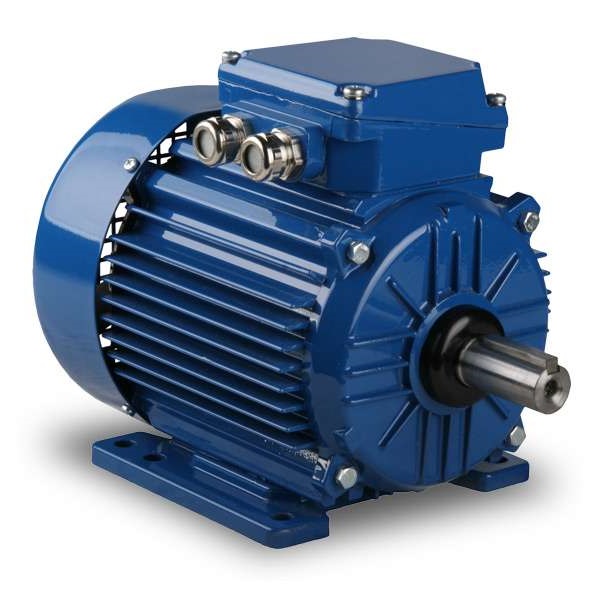
What is an AC motor, and how does it differ from a DC motor?
An AC motor, also known as an alternating current motor, is a type of electric motor that operates on alternating current. It converts electrical energy into mechanical energy through the interaction of magnetic fields. AC motors are widely used in various applications, ranging from household appliances to industrial machinery. Here’s a detailed explanation of what an AC motor is and how it differs from a DC motor:
AC Motor:
An AC motor consists of two main components: the stator and the rotor. The stator is the stationary part of the motor and contains the stator windings. These windings are typically made of copper wire and are arranged in specific configurations to create a rotating magnetic field when energized by an alternating current. The rotor, on the other hand, is the rotating part of the motor and is typically made of laminated steel cores with conducting bars or coils. The rotor windings are connected to a shaft, and their interaction with the rotating magnetic field produced by the stator causes the rotor to rotate.
The operation of an AC motor is based on the principles of electromagnetic induction. When the stator windings are energized with an AC power supply, the changing magnetic field induces a voltage in the rotor windings, which in turn creates a magnetic field. The interaction between the rotating magnetic field of the stator and the magnetic field of the rotor produces a torque, causing the rotor to rotate. The speed of rotation depends on the frequency of the AC power supply and the number of poles in the motor.
DC Motor:
A DC motor, also known as a direct current motor, operates on direct current. Unlike an AC motor, which relies on the interaction of magnetic fields to generate torque, a DC motor uses the principle of commutation to produce rotational motion. A DC motor consists of a stator and a rotor, similar to an AC motor. The stator contains the stator windings, while the rotor consists of a rotating armature with coils or permanent magnets.
In a DC motor, when a direct current is applied to the stator windings, a magnetic field is created. The rotor, either through the use of brushes and a commutator or electronic commutation, aligns itself with the magnetic field and begins to rotate. The direction of the current in the rotor windings is continuously reversed to ensure continuous rotation. The speed of a DC motor can be controlled by adjusting the voltage applied to the motor or by using electronic speed control methods.
Differences:
The main differences between AC motors and DC motors are as follows:
- Power Source: AC motors operate on alternating current, which is the standard power supply in most residential and commercial buildings. DC motors, on the other hand, require direct current and typically require a power supply that converts AC to DC.
- Construction: AC motors and DC motors have similar construction with stators and rotors, but the design and arrangement of the windings differ. AC motors generally have three-phase windings, while DC motors can have either armature windings or permanent magnets.
- Speed Control: AC motors typically operate at fixed speeds determined by the frequency of the power supply and the number of poles. DC motors, on the other hand, offer more flexibility in speed control and can be easily adjusted over a wide range of speeds.
- Effizienz: AC motors are generally more efficient than DC motors. AC motors can achieve higher power densities and are often more suitable for high-power applications. DC motors, however, offer better speed control and are commonly used in applications that require precise speed regulation.
- Applications: AC motors are widely used in applications such as industrial machinery, HVAC systems, pumps, and compressors. DC motors find applications in robotics, electric vehicles, computer disk drives, and small appliances.
In conclusion, AC motors and DC motors differ in their power source, construction, speed control, efficiency, and applications. AC motors rely on the interaction of magnetic fields and operate on alternating current, while DC motors use commutation and operate on direct current. Each type of motor has its advantages and is suited for different applications based on factors such as power requirements, speed control needs, and efficiency considerations.


editor by CX 2024-04-17


