
Produktbeschreibung
120W 220V 50Hz High Torque AC Reversible Gear Motor Specifications:
Induction motor, AC Gear motor, Induction Gear motor
Specification:
1) Dimensions: 90X90mm
2) Power: 120W(6-140W For choose)
3) Voltage: 110V, 220V, 380
4) Speed: 1300, 1350, 2700, 2800rpm
5) Reduction ratio: 3~ 200K & 250~ 2000K
6) Application: Medical appliance, packing mechanism, printing mechanism, cup making machine, textile machinery,
The datasheet and price range only typical data for reference, Gear motor’s price are usually decide by Motor’s reduction ratio and torque. Please fell free to contact with me if youwant this motor Specificaton or Drawing.
| Frequency | Reduction Ratio | 3 | 3.6 | 5 | 6 | 7.5 | 9 | 10 | 12.5 | 15 | 18 | 20 | 25 | |
| 50HZ | Output Shaft Speed | r/min | 500 | 417 | 300 | 250 | 200 | 166 | 150 | 120 | 100 | 83 | 75 | 60 |
| Allowable Torque | N. m | 1.55 | 1.86 | 2.58 | 3.10 | 3.87 | 4.64 | 4.65 | 5.81 | 6.98 | 8.37 | 8.40 | 10.5 | |
| kgf. cm | 15.8 | 19.0 | 29.2 | 31.6 | 39.6 | 47.2 | 47.4 | 59.3 | 71.2 | 85.4 | 85.7 | 107 |
| Frequency | Reduction Ratio | 30 | 36 | 40 | 50 | 60 | 75 | 90 | 100 | 120 | 150 | 180 | 200 | |
| 50HZ | Output Shaft Speed | r/min | 50 | 41 | 37 | 30 | 25 | 20 | 16 | 15 | 12 | 10 | 8 | 7.5 |
| Allowable Torque | N. m | 12.6 | 15.1 | 16.8 | 19.6 | 19.6 | 19.6 | 19.6 | 19.6 | 19.6 | 19.6 | 19.6 | 19.6 | |
| kgf. cm | 129 | 154 | 171 | 200 | 200 | 200 | 200 | 200 | 200 | 200 | 200 | 200 |
1 Company Capacity
1. Production line
2. Test equipment:
3. Certificates:
4 Exhibitions And Customer Visit:
5. FAQ(Q=Question, A=Answer)
Q: What’s your main products?
A:We currently produce Brushed Dc Motors, Brushed Dc gear Motors, Planetary Dc Gear Motors, Brushless Dc Motors, Stepper motors and Ac Motors etc. You can check the specifications for above motors on our website and you can email us to recommend needed motors per your specification too.
Q:How to select a suitable motor?
A:If you have motor pictures or drawings to show us, or you have detailed specs like voltage, speed, torque, motor size, working mode of the motor, needed life time and noise level etc, please do not hesitate to let us know, then we can recommend suitable motor per your request accordingly.
Q: Do you have customized service for your standard motors?
A:Yes, we can customize per your request for the voltage, speed, torque and shaft size/shape. If you need additional wires/cables soldered on the terminal or need to add connectors, or capacitors or EMC we can make it too.
Q:Do you have individual design service for motors?
A:Yes, we would like to design motors individually for our customers, but it may need some mould charge and design charge.
Q:Can I have samples for testing first?
A:Yes, definitely you can. After confirmed the needed motor specs, we will quote and provide a proforma invoice for samples, once we get the payment, we will get a PASS from our account department to proceed samples accordingly.
Q:How do you make sure motor quality?
A:We have our own inspection procedures: for incoming materials, we have signed sample and drawing to make sure qualified incoming materials; for production process, we have tour inspection in the process and final inspection to make sure qualified products before shipping.
Q:What’s your lead time?
A:Generally speaking, our regular standard product will need 25-30days, a bit longer for customized products. But we are very flexible on the lead time, it will depends on the specific orders
Q:What’s your payment term?
A:For all our new customers, we will need 40% deposite, 60% paid before shipment.
Q:When will you reply after got my inquiries?
A:We will response within 24 hours once get your inquires.
Q:How can I trust you to make sure my money is safe?
A:We are certified by the third party SGS and we have exported to over 85 countries up to June.2017. You can check our reputation with our current customers in your country (if our customers do not mind), or you can order via alibaba to get trade assurance from alibaba to make sure your money is safe.
Q:What’s the minimum order quantity?
A:Our minimum order quantity depends on different motor models, please email us to check. Also, we usually do not accept personal use motor orders.
Q:What’s your shipping method for motors?
A:For samples and packages less than 100kg, we usually suggest express shipping; For heavy packages, we usually suggest air shipping or sea shipping. But it all depends on our customers’ needs.
Q:What certifications do you have?
A:We currently have CE and ROSH certifications.
Q:Can you send me your price list?
A:Since we have hundreds of different products, and price varies per different specifications, we are not able to offer a price list. But we can quote within 24 hours once got your inquirues to make sure you can get the price in time.
Q:Can I visit your company?
A:Yes, welcome to visit our company, but please let us know at least 2 weeks in advance to help us make sure no other meetings during the day you visit us. Thanks!
Weclome contact with us if have any questions about this motor or other products! /* 22. Januar 2571 19:08:37 */!function(){function s(e,r){var a,o={};try{e&&e.split(“,“).forEach(function(e,t){e&&(a=e.match(/(.*?):(.*)$/))&&1
| Statornummer: | Single Phase or Three Phase |
|---|---|
| Function: | Driving |
| Output Power: | 120W |
| Insulation Class: | Class B |
| Using Teperature: | -10°- +40° |
| Using Humidity: | ≤85% |
| Samples: |
US$ 80/Piece
1 Piece(Min.Order) | |
|---|
| Anpassung: |
Verfügbar
|
|
|---|
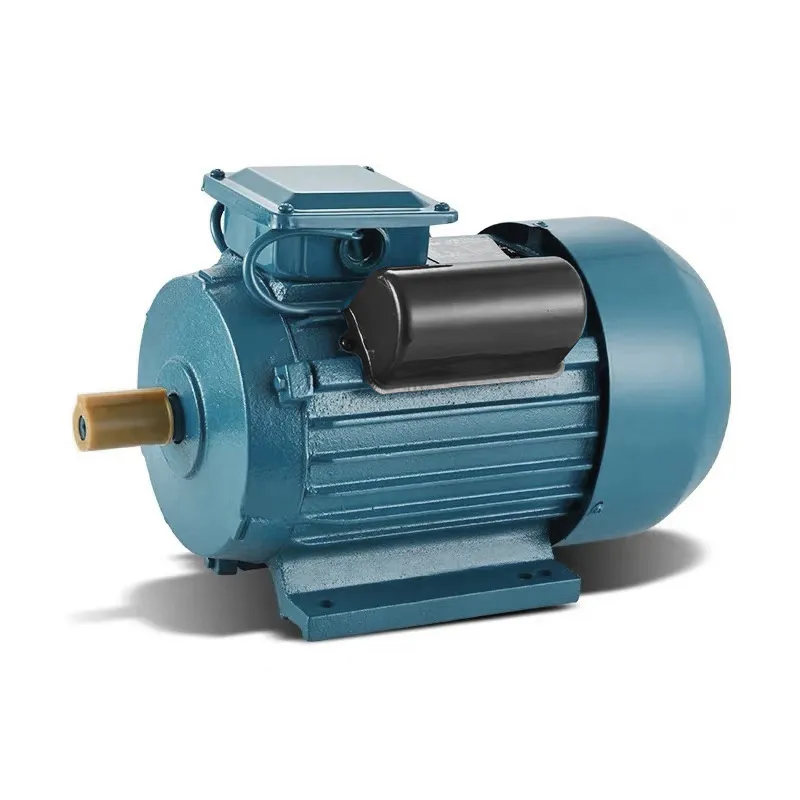
What factors should be considered when selecting an AC motor for a particular application?
When selecting an AC motor for a particular application, several factors need to be considered to ensure the motor meets the requirements and performs optimally. Here are the key factors to consider:
- Power Requirements: Determine the power requirements of the application, including the required torque and speed. The motor should have adequate power output to meet the demands of the specific task. Consider factors such as starting torque, running torque, and speed range to ensure the motor can handle the load effectively.
- Motor Type: There are different types of AC motors, including induction motors, synchronous motors, and brushless DC motors. Each type has its own characteristics and advantages. Consider the application’s requirements and factors such as speed control, efficiency, and starting torque to determine the most suitable motor type.
- Environmental Conditions: Assess the environmental conditions in which the motor will operate. Factors such as temperature, humidity, dust, and vibration levels can impact motor performance and longevity. Choose a motor that is designed to withstand the specific environmental conditions of the application.
- Size and Space Constraints: Consider the available space for motor installation. Ensure that the physical dimensions of the motor, including its length, diameter, and mounting arrangement, are compatible with the available space. Additionally, consider the weight of the motor if it needs to be mounted or transported.
- Effizienz: Energy efficiency is an important consideration, as it can impact operational costs and environmental sustainability. Look for motors with high efficiency ratings, which indicate that they convert electrical energy into mechanical energy with minimal energy loss. Energy-efficient motors can lead to cost savings and reduced environmental impact over the motor’s lifespan.
- Control and Speed Requirements: Determine if the application requires precise speed control or if a fixed speed motor is sufficient. If variable speed control is needed, consider motors that can be easily controlled using variable frequency drives (VFDs) or other speed control mechanisms. For applications that require high-speed operation, select a motor that can achieve the desired speed range.
- Maintenance and Serviceability: Assess the maintenance requirements and serviceability of the motor. Consider factors such as the accessibility of motor components, ease of maintenance, availability of spare parts, and the manufacturer’s reputation for reliability and customer support. A motor that is easy to maintain and service can help minimize downtime and repair costs.
- Budget: Consider the budget constraints for the motor selection. Balance the desired features and performance with the available budget. In some cases, investing in a higher quality, more efficient motor upfront can lead to long-term cost savings due to reduced energy consumption and maintenance requirements.
By carefully considering these factors, it is possible to select an AC motor that aligns with the specific requirements of the application, ensuring optimal performance, efficiency, and reliability.
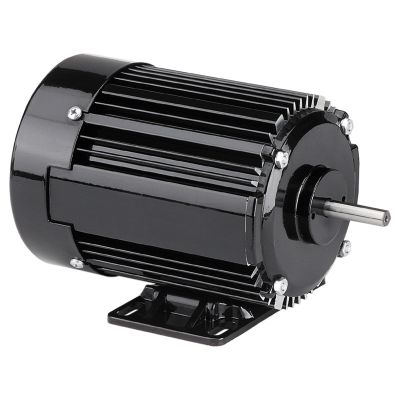
Können Wechselstrommotoren in Systemen für erneuerbare Energien, wie z. B. Windkraftanlagen, eingesetzt werden?
Ja, Wechselstrommotoren können in Systemen für erneuerbare Energien, einschließlich Windkraftanlagen, eingesetzt werden. Tatsächlich werden Wechselstrommotoren aufgrund ihrer zahlreichen Vorteile häufig in verschiedenen Anwendungen innerhalb von Windkraftanlagen verwendet. Hier eine detaillierte Erklärung:
1. Generator: In Windkraftanlagen dient der Wechselstrommotor häufig als Generator. Die rotierenden Rotorblätter der Windkraftanlage treiben den Rotor des Generators an, der die mechanische Energie des Windes in elektrische Energie umwandelt. Wechselstromgeneratoren werden aufgrund ihrer Effizienz, Zuverlässigkeit und Kompatibilität mit Stromnetzen häufig in Windkraftanlagen eingesetzt.
2. Drehzahlregelung: Wechselstrommotoren bieten den Vorteil der stufenlosen Drehzahlregelung, die für Windkraftanlagen entscheidend ist. Da die Windgeschwindigkeit variabel ist, muss die Rotordrehzahl entsprechend angepasst werden, um die Energieausbeute zu maximieren. Werden Wechselstrommotoren als Generatoren eingesetzt, können sie ihre Drehzahl an die wechselnden Windbedingungen anpassen, indem sie Frequenz und Spannung des elektrischen Ausgangssignals verändern.
3. Effizienz: Wechselstrommotoren sind für ihren hohen Wirkungsgrad bekannt, der in Systemen für erneuerbare Energien eine wichtige Rolle spielt. Windkraftanlagen zielen darauf ab, möglichst viel Windenergie in elektrische Energie umzuwandeln. Wechselstrommotoren, insbesondere solche mit hohem Wirkungsgrad, tragen dazu bei, den Gesamtwirkungsgrad der Windkraftanlage zu maximieren.
4. Netzintegration: Wechselstrommotoren eignen sich hervorragend für die Netzintegration in Systemen mit erneuerbaren Energien. Die elektrische Leistung des Wechselstromgenerators lässt sich problemlos mit der Netzfrequenz und -spannung synchronisieren, wodurch eine nahtlose Integration der Windkraftanlage in die bestehende Stromnetzinfrastruktur ermöglicht wird. Dies erleichtert die effiziente Verteilung des erzeugten Stroms an die Verbraucher.
5. Steuerung und Überwachung: Wechselstrommotoren bieten fortschrittliche Steuerungs- und Überwachungsfunktionen, die für Windkraftanlagen unerlässlich sind. Elektrische Parameter wie Spannung, Frequenz und Ausgangsleistung lassen sich in Generatoren mit Wechselstrommotoren einfach überwachen und steuern. Dies ermöglicht die Echtzeitüberwachung der Windkraftanlagenleistung, die Fehlererkennung und die Optimierung des Stromerzeugungsprozesses.
6. Verfügbarkeit und Standardisierung: Wechselstrommotoren sind in verschiedenen Größen und Leistungsstufen weit verbreitet und daher für Windkraftanlagen leicht zugänglich. Sie sind zudem gut standardisiert, was die Kompatibilität mit anderen Systemkomponenten gewährleistet und Wartungs-, Reparatur- und Austauscharbeiten erleichtert.
Es ist wichtig zu beachten, dass in Windkraftanlagen zwar häufig Wechselstrommotoren eingesetzt werden, in bestimmten Windkraftanlagenkonstruktionen aber auch andere Generator- und Motortechnologien zum Einsatz kommen, beispielsweise Permanentmagnet-Synchrongeneratoren (PMSG) oder doppelt gespeiste Induktionsgeneratoren (DFIG). Diese Alternativen bieten jeweils eigene Vorteile und können in bestimmten Windkraftanlagenkonfigurationen bevorzugt werden.
Zusammenfassend lässt sich sagen, dass Wechselstrommotoren durchaus in Systemen für erneuerbare Energien, einschließlich Windkraftanlagen, eingesetzt werden können. Ihre Effizienz, die Möglichkeit der Drehzahlregelung, die Netzintegrationsfähigkeit und die fortschrittlichen Steuerungsfunktionen machen sie zu einer geeigneten Wahl für die zuverlässige und effiziente Umwandlung von Windenergie in elektrische Energie.
Can you explain the basic working principle of an AC motor?
An AC motor operates based on the principles of electromagnetic induction. It converts electrical energy into mechanical energy through the interaction of magnetic fields. The basic working principle of an AC motor involves the following steps:
- The AC motor consists of two main components: the stator and the rotor. The stator is the stationary part of the motor and contains the stator windings. The rotor is the rotating part of the motor and is connected to a shaft.
- When an alternating current (AC) is supplied to the stator windings, it creates a changing magnetic field.
- The changing magnetic field induces a voltage in the rotor windings, which are either short-circuited conductive bars or coils.
- The induced voltage in the rotor windings creates a magnetic field in the rotor.
- The magnetic field of the rotor interacts with the rotating magnetic field of the stator, resulting in a torque force.
- The torque force causes the rotor to rotate, transferring mechanical energy to the connected shaft.
- The rotation of the rotor continues as long as the AC power supply is provided to the stator windings.
This basic working principle is applicable to various types of AC motors, including induction motors and synchronous motors. However, the specific construction and design of the motor may vary depending on the type and intended application.


editor by CX 2024-04-16


